
A paper-bag factory in Rwanda built its line in four orders over three years: the bag machine, a separate printer, three handle-patching units and a spare-parts order. Each step was small enough to absorb before the next one arrived.
Rwanda has some of the strictest plastic-bag restrictions in the world. For a packaging manufacturer there, paper bags are not a niche eco-product; they are the everyday carrier behind supermarkets, pharmacies and clothing shops. The demand is steady, local and policy-backed — which makes it attractive, and competitive.
The difficult part is not the bag body. It is the line around the bag: printing the brand, attaching a handle that survives a full shopping load, and keeping the wear parts coming. A new entrant who buys all three processes at once, before selling a single bag, carries a lot of risk.
The customer’s plan was to add capacity in stages, matching each purchase to demand the plant could already see. That meant starting with a machine that could make a sellable bag, then adding print capacity, then handles, then the consumables that keep the line running.
It is a slower-looking path than buying a complete line in one invoice. It is also the path that keeps a new factory from carrying idle capacity while it learns the market.
The first order, in early 2023, was a square-bottom paper bag making machine with inline two-color flexo printing. That combination gave the plant a finished, branded bag in one pass — the fastest route to a product a retailer could put on the shelf.
A separate flexo printing machine was added to the same project in April, extending the plant’s print capacity and format range beyond the inline unit. In June 2024, three handle-patching units and a screw air compressor arrived — the step that turned bag bodies into finished shopping bags. A spare-parts order followed in July 2025, with shipment records continuing into 2026.
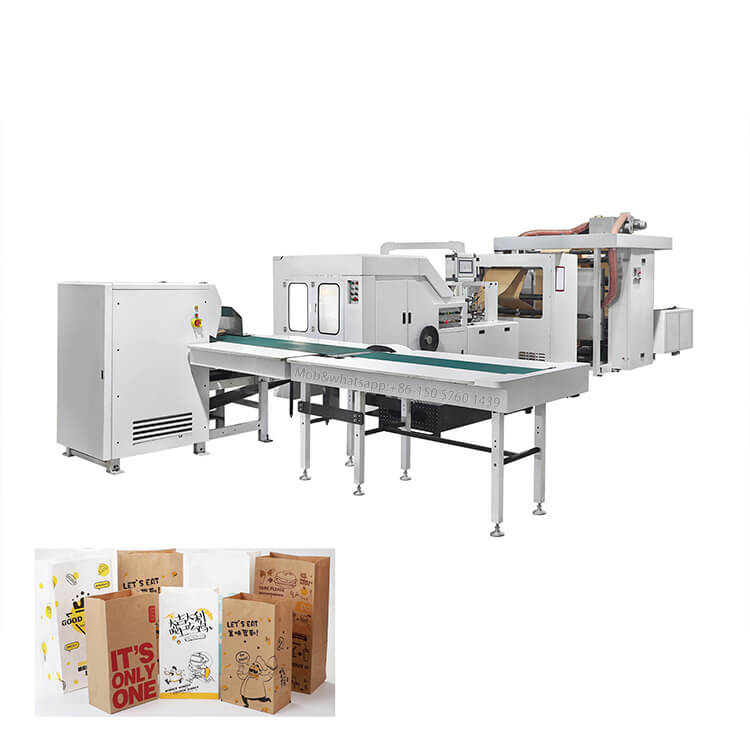
| Stage | Order | What it added |
|---|---|---|
| 2023 | Square-bottom bag machine with inline 2-colour flexo | Sellable printed bag in one pass |
| Apr 2023 | Separate flexo printing machine | More print capacity and format range |
| Jun 2024 | Three handle-patching units + air compressor | Finished shopping bags with handles |
| Jul 2025 | Spare-parts order | Wear parts on the shelf, not on a wish list |
The plan was to add capacity only as the market absorbed it. The bag machine came first because it made a product we could sell; printing and handles followed when customers asked for them.
In policy-driven paper-bag markets, the winners are usually the factories that grow in steps. Buy the machine that makes a sellable bag first. Add printing when customers ask for printed bags. Add handles when retail clients arrive. The order matters more than the invoice size.
A supplier who remembers the project history — and can ship the next stage without re-quoting the whole line — makes each step cheaper and faster than the last. That is the practical value of buying a line in stages from the same partner.
Tell us your target bag sizes, print requirement and handle style. We will plan the line in stages so each purchase matches the demand you can see.
Last reviewed: October 2026. Specifications and order details are indicative; confirm the current configuration and quotation with VIE Machinery.
