
A German decoration producer ordered a VCM-S fringe tinsel machine in July 2025. By 6 September it was on the water — under two months from order to shipment, and ahead of the season that decides the year.
Lametta — the fine metallic fringe used on Christmas trees and festival decorations — is a seasonal staple. The selling window is short, and it closes whether or not the production line is ready. If cutting capacity runs out in October, replacement equipment ordered then will not save the season.
For a German decoration producer, fringe volume had outgrown what small-scale cutting could deliver. The requirement was specific: consistent, fine fringe cuts on metallized material, at a width suited to decoration rolls rather than industrial converting.
Fringe quality is visible on the shelf. A fringe that varies in width looks cheap; a cut that frays or compresses the metallized layer loses the reflectivity that makes the product sell. The machine also had to fit a decoration workshop, not a converting plant — compact footprint, straightforward operation, and a price that matched the scale of the business.
That combination narrows the field quickly. Fringe cutting is a niche machine class, and not every supplier builds it as a standard product. The buyer was looking for a maker that had actually built this type of machine before, not a general-purpose slitter adapted to the job.
The VCM-S is a compact fringe tinsel machine designed for exactly this material class. It produces fine metallic fringe in continuous operation, with the cutting width and tension arranged for decoration rolls rather than wide-web film. For a seasonal producer, the practical advantage is not a catalogue speed record — it is repeatability at the width the product needs.
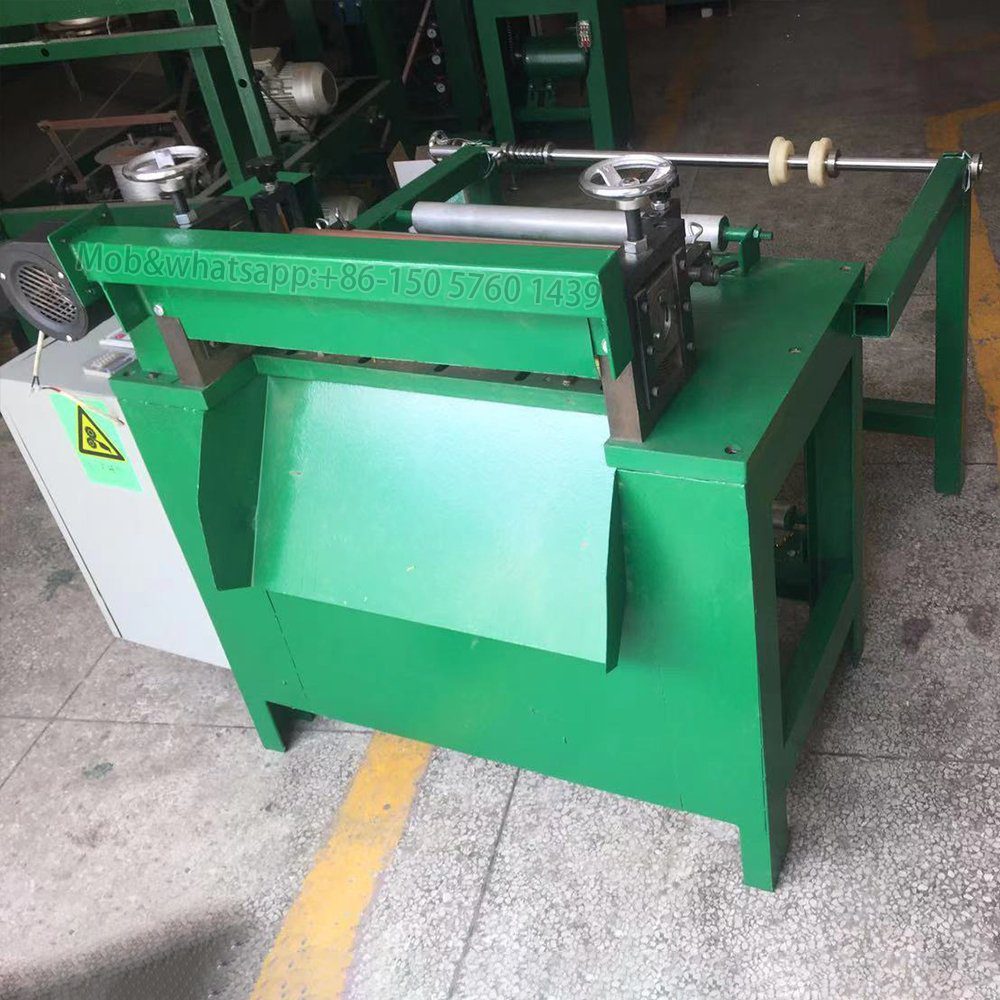
The deadline was the season, not the calendar. We needed a machine that could be built, tested and on the water before the Christmas production window closed.
The purchase order was placed in July 2025. The machine was shipped by early September, with a bill of lading dated 6 September. That is under two months from order to shipment, including production and pre-shipment preparation — a timeline that matters more in this business than a lower price with a four-month lead time.
For a European buyer sourcing from China, the difference between a two-month and a four-month lead time is not an abstraction. It is the difference between catching the season and watching it pass, and it is worth asking about explicitly in the quotation.
Seasonal products punish late capacity. The useful question is not ‘what is the fastest machine’ but ‘what is the latest order date that still lands before my season’. That answer depends on the machine class, the supplier’s build queue and the shipping route — and it should be written into the quotation, not discovered in August.
For fringe and lametta, cutting consistency is the product. A machine that holds a clean, even fringe at the width your customer buys is worth more than a faster machine that needs constant readjustment.
Tell us your roll width, material and target date. We will confirm the build and shipping timeline honestly, before you commit.
Last reviewed: October 2026. Specifications and order details are indicative; confirm the current configuration and quotation with VIE Machinery.
