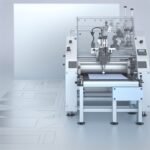
Quick answer: A sticker job needs two machines, not one: something that prints the face web and something that cuts it. VLP Label Printing Machine (VLP320 / VLP480) prints at 50–60 m/min on a 320 mm or 480 mm printing width; VLD Label die cutting machine (VLD-350 / VLD-450) then die-cuts at 30–200 presses/min on a feeding width of 350 mm or 450 mm. Flat-sheet and small-format cutting goes to VHD Hydraulic die cutting machine (VHD-110 / VHD-220). Print speed and press rate are the two numbers that decide whether the cutter becomes your bottleneck.
Stickers are a print job and a cutting job, and the machine question is decided by which of those you own. This article covers the two classes we build for it — label flexo printing and label/sheet die cutting — and the figures to compare: printing width, line speed, press rate and feeding width.
What a Sticker Job Actually Needs
Two machines, in this order:
- Print the face web — VLP Label Printing Machine runs up to 6 colour units at 50–60 m/min on a 320 mm (VLP320) or 480 mm (VLP480) printing width. Labels are narrow-web work: at volume a sheet-fed printer cannot hold that register or throughput.
- Cut the shape — VLD Label die cutting machine (VLD-350 / VLD-450) die-cuts at 30–200 presses/min on a 350 mm or 450 mm feeding width, with matrix waste stripped and the finished labels rewound.
When the order is flat sheets rather than a roll — hangtags, shaped stickers cut from printed sheet stock — VHD Hydraulic die cutting machine (VHD-110 / VHD-220) is the press for that job, cutting items up to 150×150 mm on a hydraulic stroke you set per material.
Web or Sheet: Where the Line Splits
A web line (print, then die-cut inline) is the cheaper way to produce thousands of one shape: register is set once and the cutter does not stop. A sheet press is the right answer when the artwork changes every run or the stock arrives already printed — then you are buying cutting force and tooling, not print stations. Shops that sell stickers in volume usually end up with both: the web line for standard shapes, the press for custom short runs.
Features to Look for in Die Cut Sticker Machines
Judge the pair of machines, not one of them. These are the figures from our own lines, and they are the figures to ask any supplier for:
- Printing width and line speed — VLP Label Printing Machine: 320 mm (VLP320) or 480 mm (VLP480), at 50–60 m/min. A 480 mm web at 60 m/min is the production ceiling; a narrow-web machine at the same speed simply makes fewer labels per minute.
- Press rate and feeding width — VLD Label die cutting machine: 30–200 presses/min, feeding width 350 mm (VLD-350) or 450 mm (VLD-450). Press rate is what has to match the printer, and it is adjustable, so the pairing is set by the stroke rate you run, not by the maximum.
- Flat sheet work — VHD Hydraulic die cutting machine covers cut items from small format up to 150×150 mm, for sheets rather than a web.
- Register between print and cut — printed artwork and the cutting die have to agree; ask how much register adjustment the cutter allows before committing to a repeat length.
Frequently Asked Questions
What is the best die cut sticker machine for beginners?
For beginners, the deciding criteria are cut area, whether the machine registers to a printed mark, and how tooling is changed between shapes. A flat-bed cutter with a small die set suits short runs of one shape; a web press plus an inline or flat-bed cutter suits repeats.
Can I use any printer with a die cut sticker machine?
A die cutter is matched to the web it receives, not to a printer brand: feeding width (350 or 450 mm on the VLD Label die cutting machine), repeat length, and whether it registers to a printed mark. If printing is outsourced, give the converter those same three figures.
What materials can die cut sticker machines handle?
Die cut sticker machines can handle various materials, including vinyl, paper, and cardstock. Some advanced models can even cut thicker materials like fabric and leather.
How do I ensure my stickers have a professional finish?
Finishing comes from the stations your line has: ask whether varnish or spot UV is inline on the press or a separate pass, because a second pass is a second register problem. Lamination and a face adhesive are the two that actually decide whether a sticker survives outdoor use.
What warranty and after-sales support comes with the machine?
Every VIE machine carries a 2-year warranty counted from the date the machine arrives, excluding normal wear parts, plus lifetime technical support. An engineer can be sent for on-site installation and commissioning. Lead time is 7–45 days depending on the machine type.
Is a web line better than a wide-format sheet printer for stickers?
For repeat shapes at volume, a flexo web press plus an inline die cutter is the productive answer, because printing and cutting run as one pass. A wide-format sheet printer earns its place when the work is oversized, one-off or the stock only exists as sheets — then you cut on a press instead.
Conclusion
Choosing the right die cut sticker machine and printing solution depends on your specific needs and budget. Whether you’re a DIY enthusiast, a small business owner, or a large-scale manufacturer, there’s a machine out there that fits your requirements. By fixing the printing width, line speed and press rate your volume requires before comparing anything else, you’ll be well-equipped to make an informed decision. Happy sticker making!
Printing width, press rate and the shapes you have to hold are what decide the line — send them on our contact page and we will reply with a machine recommendation.